A few warm days in March or April can make it seem like deck-building weather has arrived. In Wisconsin, that can change quickly. Snowmelt, wet soil, overnight freezes, heavy spring rain, and summer storms can all affect what is happening at the jobsite.
For homeowners in Central Wisconsin, choosing a deck installation company means looking beyond an open date on the calendar. At Kobiske Construction, the deck design, site conditions, materials, and time of year all factor into project planning. A straightforward freestanding deck does not create the same construction sequence as a multi-level deck, a custom herringbone layout, or a deck with built-in seating.
What Changes When Wisconsin Weather Is Part of the Build?
A deck installation company plans around Wisconsin weather by looking at current ground conditions, frost requirements, precipitation, temperature, and the work involved in the specific deck design. Weather does not affect every project in the same way, which is why the site and construction details need to be considered along with the forecast.
The goal is not to find a season when Wisconsin weather is perfect. It is to plan each stage of the project around conditions that make sense for the work being completed.
What Should a Deck Installation Company Look at Before Scheduling?
The first question is not simply whether rain is expected. We also need to consider what part of the deck is being built and what the property is like.
Footing work depends on ground conditions and Wisconsin frost requirements. The state’s deck rules address excavation, footings, frost protection, structural loads, stairs, guards, and decay protection for applicable residential decks. Footings should be planned according to those requirements rather than based on a stretch of unusually warm winter or early spring weather.
The property can add other variables. A sloped yard, an existing patio, landscaping, limited access, or a deck attached to a new home can change how work is sequenced.
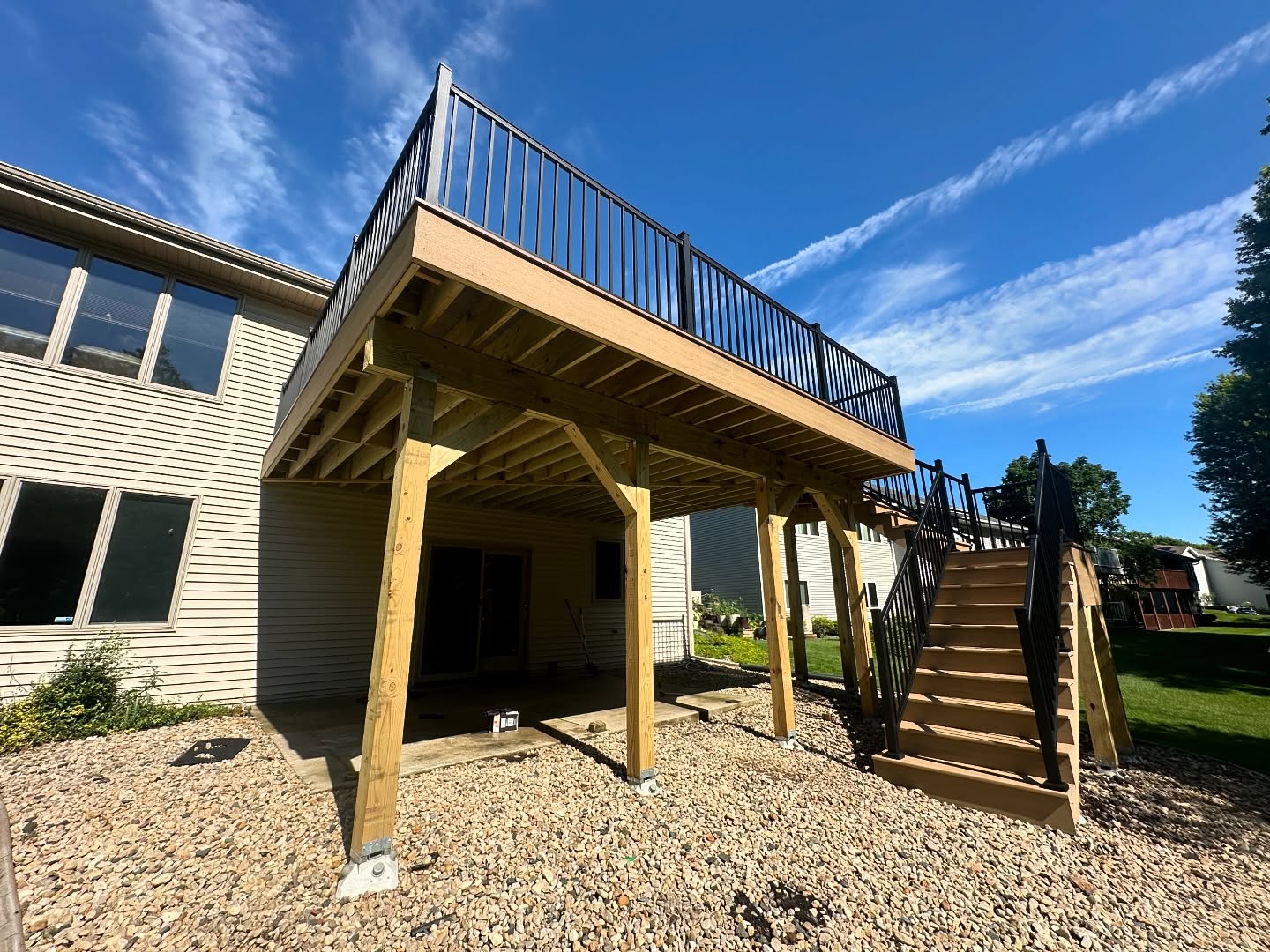
Deck design matters too. Kobiske builds custom decks that can include multi-level, wraparound, attached, freestanding, pool and hot tub, and covered configurations. A larger deck with several elevations or custom features has more individual construction steps to coordinate than a smaller rectangular platform.
That distinction is easy to miss when homeowners are comparing project timelines. Square footage is only one part of the schedule.
How Do Custom Deck Details Affect Weather Planning?
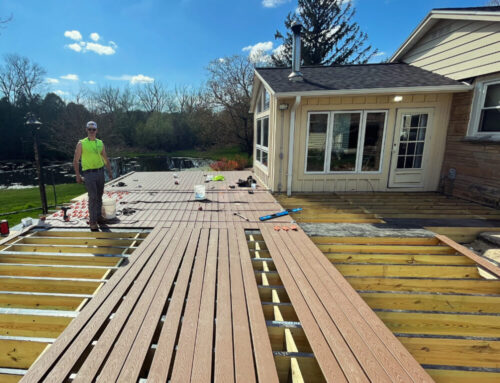
A custom deck can involve details that require more layout, cutting, framing, or finish work. Weather delays can affect the sequence of those details even when the overall deck size stays the same.
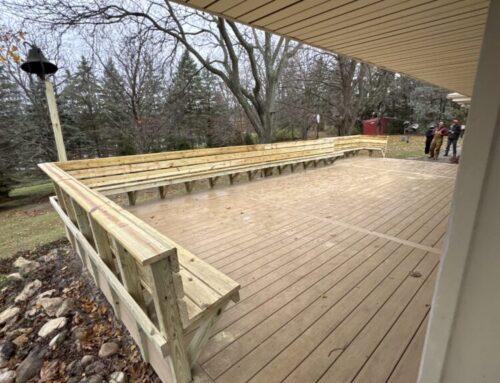
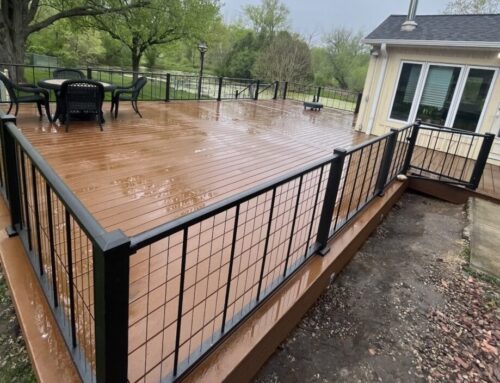
Kobiske’s deck projects show why this matters. One Lake Mills installation used a herringbone design. A Pewaukee project included custom bench seating. Other completed work includes a new-construction deck in Oconomowoc, TimberTech deck projects, and a deck installation in Sun Prairie.
Those are different jobs even though they all fall under deck construction.
A herringbone surface requires a different layout than boards running in one direction. Built-in seating adds another component to the deck. A new-construction project may also need to fit into a larger home-building schedule. Weather planning should reflect those differences rather than treating every deck as the same sequence of tasks.
Wood vs. Composite in Changing Wisconsin Conditions
Material selection can also affect project details. Kobiske offers composite, hardwood, and pressure-treated lumber, giving homeowners several options based on appearance, maintenance preferences, and the design of the deck.
Wood decking appeals to homeowners who want a natural surface and are comfortable with the maintenance that comes with exterior wood. Exposure to Wisconsin rain, snow, sun, and moisture makes future cleaning and finishing part of owning a wood deck.
Composite provides a different maintenance profile. Kobiske has completed TimberTech deck projects in Wisconsin, including replacement and renovation work. Composite products still need to be installed according to the manufacturer’s requirements for the specific product being used.
Weather is not a reason to automatically select one material over another. The better question is how the material fits the homeowner’s maintenance expectations, deck design, property, and long-term plans.
When Weather Planning Matters Most
Weather deserves extra attention when the deck is part of a larger project or has a deadline tied to how the homeowner wants to use it. Someone hoping to have an outdoor space ready for summer gatherings may want to begin design conversations well before late spring.
It also matters when the property has conditions that may complicate construction. Sloped lots, wet areas, established landscaping, multi-level layouts, and projects connected to new construction can all introduce more variables than a basic freestanding deck.
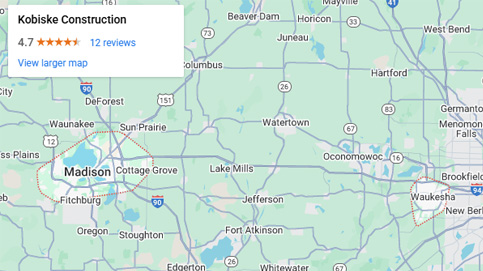
Homeowners can review Kobiske’s current service areas when planning a project. Past work spans communities from the Lake Country area to Madison-area locations, giving us experience with deck projects across different properties and settings.
Not every weather change means work needs to stop or a schedule needs to change. The important distinction is whether the conditions affect the particular stage of construction taking place.
Plan Your Central Wisconsin Deck Around the Actual Project
Wisconsin weather is one part of deck planning, but it should never be treated as the only part. The deck layout, materials, property conditions, structural requirements, and custom details all affect how the construction schedule comes together.
A deck installation company should be able to look at those pieces as one project instead of giving every homeowner the same seasonal advice. Kobiske Construction builds decks with attention to the way each home, yard, and design differs.
If you are planning a new deck in Central Wisconsin, contact Kobiske Construction to discuss the layout, materials, site conditions, and timing for your project.