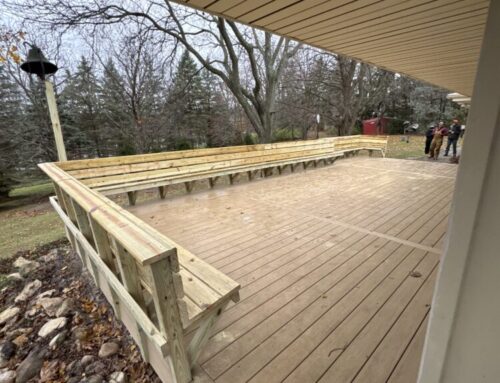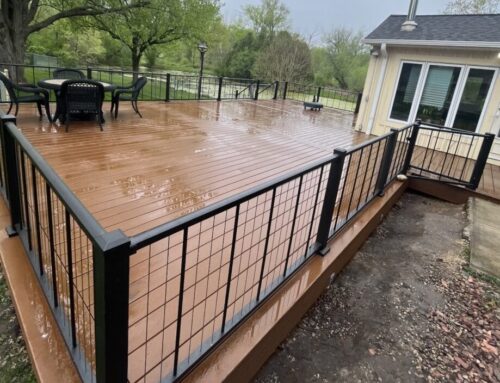

A backyard with mature trees can be a great setting for a deck, but it also changes how that deck should be planned. Shade can keep boards damp longer, leaves can collect around the structure, and established trees may affect where footings, stairs, and other parts of the deck can go.
For homeowners planning wood deck construction in Central Wisconsin, these details are worth working through before settling on a size or layout. At Kobiske Construction, our deck services focus on custom designs that fit the home, yard, and way the homeowner plans to use the space.
What Makes a Wood Deck Work in a Shaded Yard?
Wood deck construction can work well in a yard with trees, shade, and changing moisture levels. The layout should account for drainage, airflow, board spacing, tree placement, and areas where water or debris may collect.
A shaded yard does not automatically mean wood is the wrong material. It does mean the deck may dry differently than one that receives direct sun for most of the day.
How Do Trees Change the Deck Layout?
Mature trees create fixed points that need to be considered when a deck is designed. Trunks, visible roots, low branches, and the location of the tree in relation to the house can influence the deck footprint.
For example, moving a stairway or changing one edge of the deck may make more sense than forcing a standard rectangular layout into a yard with an established tree. Footing locations also need to work with the conditions found on the property.
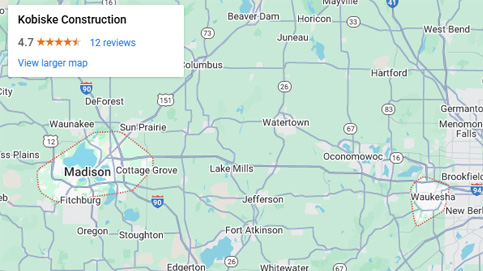
That type of planning is especially useful in established neighborhoods where landscaping has had years to mature. Kobiske Construction serves homeowners throughout communities such as Oconomowoc, Delafield, Hartland, Pewaukee, Sussex, Waukesha, Brookfield, New Berlin, and Lake Country. Our service areas also extend west toward Madison, Middleton, Verona, Fitchburg, Cottage Grove, Monona, Stoughton, and Sun Prairie.
The yard should help determine the deck layout rather than the deck being designed without considering what is already there.
Why Does Shade Make Moisture Planning More Important?
Wood naturally gains and loses moisture as outdoor conditions change. The USDA Forest Service Wood Handbook explains how wood moisture levels respond to surrounding humidity and environmental conditions. That matters in a backyard where trees block sunlight for much of the day. A shaded portion of a deck may remain damp longer after rain than an exposed section only a few feet away.
Deck construction can account for those conditions through practical details. Water needs a path away from the structure. Air should be able to move around exposed wood. Areas beneath trees should also remain reachable so leaves, needles, and other debris can be removed instead of being left against deck surfaces.
Homeowners should look beyond whether the yard simply feels “wet” or “dry.” Where moisture collects, where snow tends to sit, how the ground slopes, and where roof or downspout water travels can all give useful information before construction begins.
Wood or Composite for a Tree-Filled Backyard?
Kobiske Construction offers deck material choices that include wood and composite options. The better fit depends partly on how the homeowner wants the deck to look and how much ongoing maintenance they want to handle.
Wood appeals to homeowners who want the appearance and feel of natural lumber. Outdoor wood does require maintenance over time, especially when it is exposed to Wisconsin rain, snow, humidity, and seasonal temperature changes.
Composite decking is often considered by homeowners looking for lower routine maintenance. It still needs cleaning, and leaves and debris can still collect on or around the deck when mature trees are nearby. Material choice does not replace good site planning. A deck built in a heavily shaded area still needs attention to water movement, the surrounding yard, and the relationship between the structure and nearby trees.
When Does This Planning Matter Most?
Tree and moisture planning becomes especially important when a deck will sit directly beneath a mature canopy, beside dense landscaping, along a shaded side of the house, or in a lower part of the property.
It can also matter when replacing an older deck. The existing structure may show where debris routinely gathers or where sections stay damp longer. That information can help guide decisions about the new layout instead of automatically rebuilding every feature in the same location.
Homeowners with open, sunny yards may have fewer tree-related constraints, but Wisconsin weather still makes drainage and outdoor exposure relevant to any deck project.
Kobiske Construction has completed deck projects in communities from Lake Country to Madison and across Southern Wisconsin.
Plan Wood Deck Construction Around Your Backyard
A wooded or shaded property does not need a one-size-fits-all deck. Tree locations, drainage, sunlight, access, and maintenance preferences should all be part of the conversation before the final layout is chosen.
Kobiske Construction provides wood deck construction for homeowners throughout Central Wisconsin and the surrounding communities we serve. If you are considering a new deck around mature trees, shade, or challenging yard conditions, contact us to start planning a deck that makes sense for your home and property.